

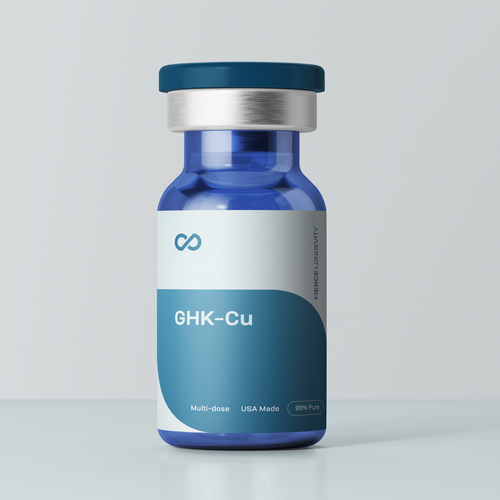
GHK-Cu (Glycyl-L-Histidyl-L-Lysine-Copper) is a naturally occurring copper peptide complex found in human plasma, saliva, and urine. It’s composed of a short chain of three amino acids bound to a copper ion, which is essential for tissue repair, collagen synthesis, and cellular regeneration. Research shows that GHK-Cu can help stimulate wound healing, reduce inflammation, and promote youthful skin appearance. It also supports hair growth, antioxidant defense, and overall tissue renewal, making it one of the most versatile peptides in regenerative research.
COA / HPLC / MS
View the available third-party testing documentation for this product.


What's Included


Key Highlights
Boosts Collagen & Elastin Production
Promotes firm, youthful, and healthy skin by stimulating key structural proteins.
Accelerates Wound & Tissue Healing
Encourages rapid regeneration of skin and connective tissues.
Reduces Inflammation & Oxidative Damage
Acts as a natural anti-inflammatory and antioxidant defense system.
Stimulates Hair Growth
Supports follicle regeneration and reduces hair thinning in research settings.
Enhances Skin Barrier & Hydration
Improves moisture retention and restores the skin’s protective barrier.
High-Purity Research Grade
USA-manufactured, HPLC-tested (≥99% purity), and endotoxin-screened (<0.1 EU/mg).

What Is GHK-Cu Copper?
GHK-Cu is a bioactive tripeptide first identified in human plasma. It naturally binds with copper ions, activating processes that repair damaged tissue, stimulate collagen and elastin production, and protect cells from oxidative stress.
Because of these properties, GHK-Cu has become a focus in anti-aging, dermatological, and regenerative medicine research. It’s also studied for its role in skin rejuvenation, nerve regeneration, and stem cell activation.

Why Choose GHK-Cu Copper?
Researchers select GHK-Cu for its multi-target regenerative potential—combining anti-inflammatory, antioxidant, and tissue-repair effects in one peptide. Its ability to activate cellular remodeling pathways and stimulate collagen and glycosaminoglycan synthesis makes it a top choice for studies in anti-aging, wound repair, and dermatological regeneration.
Each vial is produced under ISO-certified, cGMP-like conditions, with rigorous purity and potency testing. This ensures reliable results for studies focused on skin biology, cellular repair mechanisms, and copper-dependent enzyme activity.
GHK-Cu Copper FAQs
How much GHK-Cu should be used (dose) in research protocols?
There is no established safe or effective human dosage because it is not approved. Dosage must be based on specific experimental designs, models, and literature protocols.
How does GHK-Cu work (mechanism)?
GHK-Cu acts on fibroblasts to increase production of mRNA and proteins for collagen, elastin, proteoglycans, and glycosaminoglycans. It also modulates metalloproteases and reduces TGF-β to balance tissue remodeling and scarring.
What are the known benefits or effects from research?
- Collagen synthesis and skin regeneration
- Wound healing and improved tissue repair
- Anti-inflammatory and antioxidant activity
- Hair growth support in scalp/follicle models
How should GHK-Cu be stored & handled?
It should be stored cold and protected from light, and reconstituted using sterile technique. (These are common peptide handling practices; see stability notes from literature).
Can GHK-Cu be dangerous or have risks?
Yes. Because it’s experimental and not regulated for human use, potential risks include copper toxicity, impurities, or off-target effects. Handling must follow strict laboratory safety.
Can GHK-Cu be combined with other peptides or compounds?
Yes — in research settings, it’s sometimes used in combination with regenerative or repair peptides (e.g. BPC-157, Epithalon) to study synergistic effects—but research is limited.